A drain rarely blocks all at once. More often, it starts with a sink taking a bit longer to empty, a toilet making a strange gurgling sound, or a bad smell that keeps coming back no matter how much you clean. If you are wondering what causes blocked drains, the short answer is that everyday waste builds up over time, and sometimes the problem is further down the line than most people expect.
In Sydney homes and commercial properties, blocked drains are usually caused by a mix of habits, ageing pipework, and outdoor conditions. Some causes are easy to prevent. Others need proper inspection and clearing by a licensed plumber, especially when the blockage is deep in the sewer or stormwater system.
What causes blocked drains most often?
The most common cause is buildup inside the pipe. In kitchen sinks, that is usually grease, oil and food scraps. In bathroom drains, it is often hair, soap residue and toothpaste. In toilets, the main issue is flushing items that should never go down there in the first place.
The reason these blockages get worse over time is simple. A small amount of residue sticks to the pipe wall, then more waste catches on it, and before long the water has less room to pass through. What starts as a slow drain can turn into a full blockage, overflow, or even wastewater backing up into the property.
For many households, the warning signs are there well before the emergency. Slow draining water, bubbling sounds, foul odours and repeated clogs usually mean the pipe is partially blocked and getting worse.
Grease and food waste in kitchen drains
Kitchen drains cop a lot of misuse. Even careful households can end up with a blockage if fats, oils and grease are washed down the sink regularly. These substances may go down as liquid, but they cool and harden inside the pipe. Once that sticky layer forms, food particles start catching on it.
Coffee grounds, rice, pasta, egg shells and stringy food scraps are common troublemakers too. A garbage disposal does not solve everything either, because broken-up food can still settle in pipe bends. In commercial kitchens or staff lunchrooms, this kind of buildup can happen even faster because the drains are used more heavily.
Hot water and dishwashing liquid might shift a very minor fresh buildup, but once grease has lined the pipe, DIY fixes usually only provide short-term relief.
Hair, soap and bathroom residue
Bathroom drains block for different reasons, but the pattern is similar. Hair is the big one. It binds with soap scum and forms clumps that catch more debris over time. Shower and basin drains are especially prone to this because the pipework is narrower and often includes bends where waste settles.
Soap residue is often underestimated. It does not just rinse away cleanly. Over time it can leave a hard film on the inside of the pipe, particularly in homes with mineral-rich water. Add shaving cream, toothpaste, beauty products and general grime, and you have the right conditions for a stubborn blockage.
If one bathroom fixture is slow, the issue may be localised. If several fixtures are draining poorly at once, the blockage may be deeper in the branch line or sewer.
Wet wipes, sanitary products and toilet paper overload
Toilets are built to handle human waste and toilet paper. That is it. One of the most common reasons for blocked toilets is flushing wipes, paper towel, tissues, sanitary items, cotton buds or excessive amounts of toilet paper.
Even products labelled flushable can cause trouble. In real plumbing systems, many of these items do not break down quickly enough. Instead, they catch in bends or join with other debris in the line. In strata buildings and commercial premises, this can create bigger shared drainage problems, not just a blockage in one unit or tenancy.
Children’s toys and accidental foreign objects are another cause plumbers see regularly. It may sound unlikely until it happens in your home.
Tree roots in underground pipes
If the blockage keeps returning, or multiple drains are affected, tree roots may be involved. This is a very common issue in older Sydney suburbs where mature trees and older earthenware pipes are part of the landscape.
Tree roots naturally seek moisture. If there is a small crack, loose joint or weak section in an underground pipe, roots can enter and expand inside it. Once they are in, they trap paper, waste and debris, creating a serious obstruction. In some cases the roots damage the pipe so badly that clearing the blockage is only part of the fix.
This is where a camera inspection makes a real difference. It shows whether the problem is simply a blockage that can be cleared or a damaged pipe that may need repair or replacement.
Broken, collapsed or poorly installed pipes
Not every blocked drain is caused by what goes into it. Sometimes the problem is the pipe itself. Age, ground movement, corrosion and poor installation can all affect how well a drain works.
A pipe with the wrong fall will not carry waste properly. A cracked section can catch solids. A collapsed drain can stop flow almost completely. In older properties, outdated materials can also become brittle or misaligned over time.
This matters because the fix depends on the cause. Clearing a blockage in a damaged pipe may restore flow for the moment, but if the pipe has failed structurally, the drain is likely to block again.
Stormwater issues and outdoor drain blockages
When people think of blocked drains, they often think of sinks and toilets, but outdoor drains are just as important. Stormwater drains can block with leaves, dirt, mulch, silt and garden debris. After heavy rain, a blocked stormwater line may show up as pooling water, overflowing grates or flooded outdoor areas.
In some properties, the issue is made worse by poor surface drainage or surrounding landscaping. If garden beds, pavers or driveways direct water towards the property but the stormwater system cannot clear it properly, water can build up quickly.
This is one of those situations where timing matters. During a Sydney downpour, a partially blocked outdoor drain can become a much bigger problem fast.
It is not always the nearest drain
One thing that catches people out is assuming the blockage is right where the symptom appears. A slow kitchen sink might have a local blockage in the trap, but it could also be caused by a restriction further down the line. A toilet backing up may point to a sewer issue affecting the whole property.
That is why repeat blockages should not be brushed off. If you have already tried the simple fixes and the problem keeps coming back, there is usually an underlying cause that needs proper attention.
When to stop trying DIY fixes
A plunger can help with a basic blockage. Removing visible hair from a waste grate can help too. But chemical drain cleaners are often more trouble than they are worth. They can damage some pipe materials, create safety risks, and still fail to clear the actual cause.
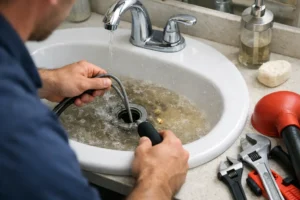
If water is backing up, multiple drains are slow, sewage smells are present, or the blockage keeps returning, it is time to get a licensed plumber involved. The right equipment matters here. High-pressure water jetting and CCTV drain cameras do a much better job than guesswork, especially for tree roots, heavy buildup or blockages deep underground.
For homeowners, landlords and business operators, fast action usually means less mess, less damage and less disruption. That is especially true in cafés, offices, strata buildings and busy family homes where a blocked drain affects more than one person.
How to reduce the chance of blocked drains
Prevention is usually straightforward, even if it is not perfect. Do not pour grease down the sink. Scrape food scraps into the bin. Use a hair catcher in showers. Only flush toilet paper. Keep outdoor drain grates clear of leaves and garden debris.
If your property has older pipes or a history of tree root intrusion, occasional inspections can save you from a much larger repair later. It depends on the age of the system, the trees on site and whether you have had repeat drainage trouble before.
At JET Plumbing, we often find that people call only after the drain is fully blocked, when the warning signs were there for weeks. Acting earlier is usually simpler, cleaner and cheaper.
A blocked drain is never convenient, but it is usually trying to tell you something. The sooner you deal with the cause, the easier it is to get things back to normal.