A hot shower going cold halfway through the morning rush is usually the moment people start asking when to replace hot water system equipment rather than keep paying for repairs. In Sydney homes and small businesses, hot water units often give warning signs before they fail completely. The trick is knowing which signs mean a simple repair will do the job and which ones mean replacement is the smarter, cheaper option.
If your system is struggling, leaking, making odd noises, or pushing up your power bill, waiting too long can turn a manageable job into an urgent one. For homeowners, landlords, strata managers and business operators, that usually means more disruption, more cost, and less choice about what gets installed next.
When to replace hot water system units
The short answer is this: replace the system when it is no longer reliable, no longer efficient, or no longer worth repairing. That sounds simple, but in practice it depends on the age of the unit, the type of fault, the cost of parts, and how urgently you need hot water restored.
A storage hot water system that is 10 to 15 years old is already getting into the range where replacement becomes more likely. Some units last longer, especially if they have been well maintained, but age matters because internal wear is often not visible from the outside. A tank can look fine one day and start leaking the next.
Continuous flow units can also last well, but if they are becoming unreliable, parts are hard to source, or repairs are stacking up, replacement is often the better long-term move. The same applies to electric, petrol and heat pump systems. Each type has different strengths, but none lasts forever.
The clearest signs your system is on the way out
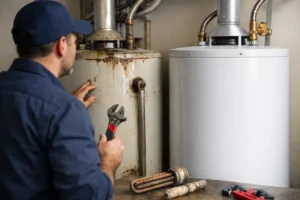
A leaking tank is one of the biggest red flags. If the cylinder itself is leaking, that is usually not a repairable problem. Valves, fittings and pipe connections can often be repaired, but once the tank body has failed, replacement is generally the only sensible option.
Rust-coloured water is another warning sign, particularly if it is only showing up on the hot side. That can point to corrosion inside the tank. Some systems have sacrificial anodes that help slow this process, but once corrosion has taken hold, the unit may be nearing the end of its service life.
Strange noises matter too. Rumbling, popping or banging sounds from a storage system can mean sediment has built up inside the tank. In some cases, flushing the unit may help, but older systems with heavy build-up often lose efficiency and work harder to heat water. That can shorten their remaining life.
Inconsistent water temperature is another common sign. If you are getting hot, then lukewarm, then cold water without a clear reason, the thermostat, element, burner, tempering valve or internal components may be failing. Some of these issues can be repaired, but repeated temperature problems in an older system usually point to replacement.
A sudden increase in your energy bill can also be linked to a failing hot water unit. As systems age, they often become less efficient. They take longer to heat, cycle more often, and waste more power or petrol. If the bills are climbing and the unit is already old, replacement can save money over time.
Repair or replace – how to decide
This is where a lot of people get stuck. No one wants to replace a system too early, but no one wants to keep pouring money into a unit that is ready to quit.
A good rule of thumb is to compare the repair cost with the age and condition of the system. If the unit is relatively new and the fault is isolated, repair often makes sense. For example, replacing a valve, thermostat or igniter on a younger unit is usually worthwhile.
If the system is older and the repair is expensive, replacement is often the better decision. Paying several hundred dollars to fix one part on a 12-year-old tank can be false economy if another major issue appears a few months later. That is especially true when you factor in call-out costs, lost time and the inconvenience of another breakdown.
There is also the question of availability. Some older models have parts that are discontinued or difficult to source. Even if a repair is technically possible, it may not be practical or cost-effective.
Age matters, but it is not the only factor
People often ask for a simple number of years, but there is no perfect cut-off. Usage patterns make a big difference. A hot water system in a busy family home or commercial setting will generally wear out faster than one in a lightly used property.
Water quality also plays a part. Hard water and sediment can shorten the life of tanks and heating components. Installation quality matters too. A properly sized and correctly installed unit will usually perform better and last longer than one that has been poorly fitted or is constantly working beyond capacity.
That is why two systems of the same age can be in very different condition. One may have years left in it, while the other is ready to be replaced.
Best time to replace a hot water system
The best time is before it fails completely. Planned replacement gives you more control over the type of system, installation timing and overall cost. It also helps avoid emergency situations, especially in winter or during busy periods when hot water is non-negotiable.
If your unit is showing clear warning signs, booking an inspection early can save a lot of stress. You can weigh up repair versus replacement, choose a system that suits your household or property, and avoid the panic of trying to make a fast decision after a complete breakdown.
For landlords and strata managers, replacing an unreliable system before it fails can also reduce tenant complaints and prevent water damage. For small businesses, it can mean avoiding downtime and keeping staff and customers comfortable.
Choosing the right replacement
If replacement is the right move, it is worth thinking beyond a straight like-for-like swap. The best system depends on your property, water usage, energy source and budget.
A larger family may need a bigger storage unit or a continuous flow system with stronger delivery. A smaller household may be paying to heat more water than it actually uses. Petrol systems can be economical where petrol is available, while electric options may suit some sites better. Heat pumps are worth considering for efficiency, but they are not ideal for every property or budget.
Upfront cost matters, but running cost matters too. The cheapest unit to install is not always the cheapest one to own over the next ten years. That is why practical advice on sizing and suitability is just as important as the install itself.
Common mistakes to avoid
One common mistake is waiting until the system bursts. By then, you are not comparing options calmly. You are trying to restore hot water as fast as possible, and that urgency can limit your choices.
Another mistake is focusing only on the repair bill in front of you. A lower short-term cost can look appealing, but if the unit is old and unreliable, repeated repairs often add up to more than replacement.
It is also easy to choose the wrong size system. Too small, and you run out of hot water. Too large, and you spend more than necessary on both installation and running costs. Proper advice makes a big difference here.
A practical way to think about replacement
If your hot water system is over 10 years old, has needed more than one repair, or is showing signs like leaking, rust, inconsistent temperature or rising running costs, replacement should be seriously considered. If it is younger and the issue is minor, a repair may still be the right call.
For Sydney properties, fast action matters because a failing hot water unit rarely improves on its own. Getting it checked early gives you options, whether that means a straightforward repair or a properly planned replacement. If you are not sure which way to go, having a licensed local plumber assess the system can save time, money and a lot of frustration. At that point, the goal is simple – reliable hot water, fair advice, and the job done properly the first time.
When your system starts giving warnings, treat them as a chance to act early rather than a reason to wait for the cold shower that makes the decision for you.